Build daily in-app habits that drive 3–5× retention →
Stop losing users and revenue to Big Tech. Own your social graph with Social+ SDK.
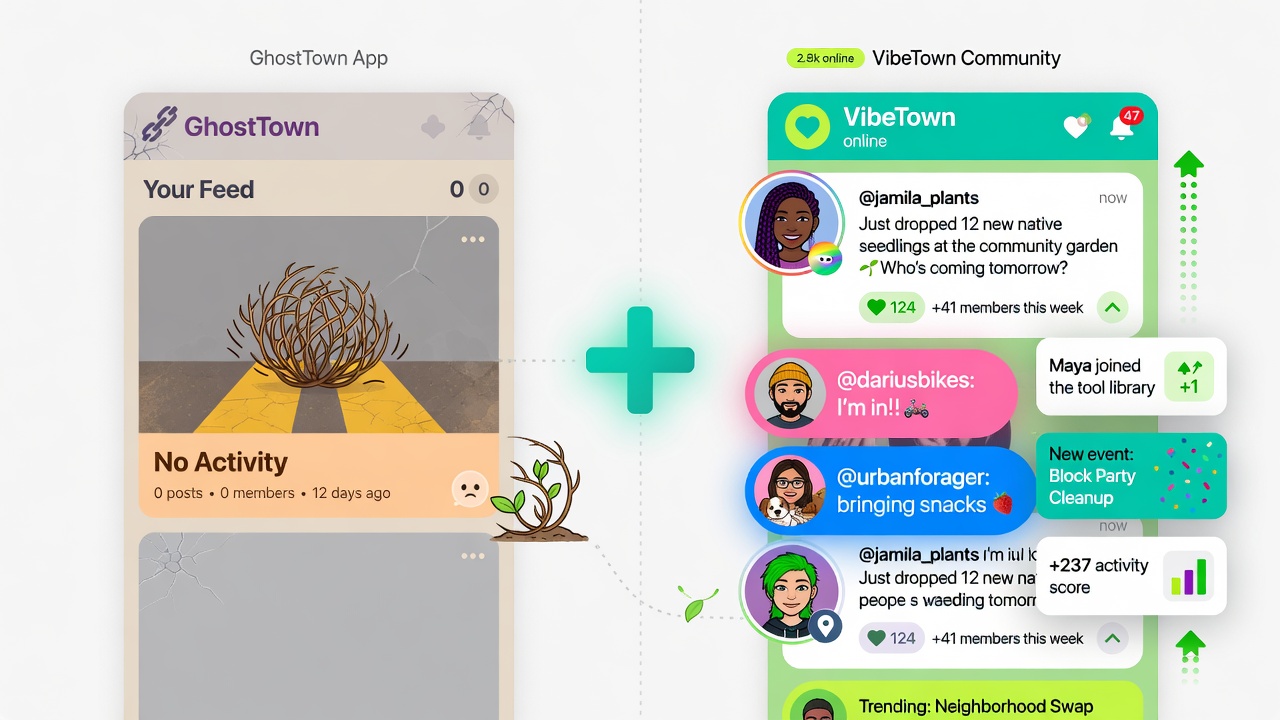
Every new social platform faces the same brutal reality. No one wants to join an empty room.
Humans crave connection, but they won’t show up until others are already there. This is the classic chicken-and-egg problem in community building.
Founders call it the ghost town trap. A blank feed or silent chat feels dead. Users bounce instantly. Without activity, there is no activity.
Biggest names in social solved it the same way: temporary artificial momentum. Bots, fake profiles, and scripted posts created the illusion of life until real users arrived.
Today that tactic still works, but the rules have changed. In 2026, users spot fakes faster than ever. Trust evaporates when the curtain is pulled back.
Here’s exactly how the biggest platforms did it—and what smarter, more authentic strategies look like for your Social+ app in 2026.
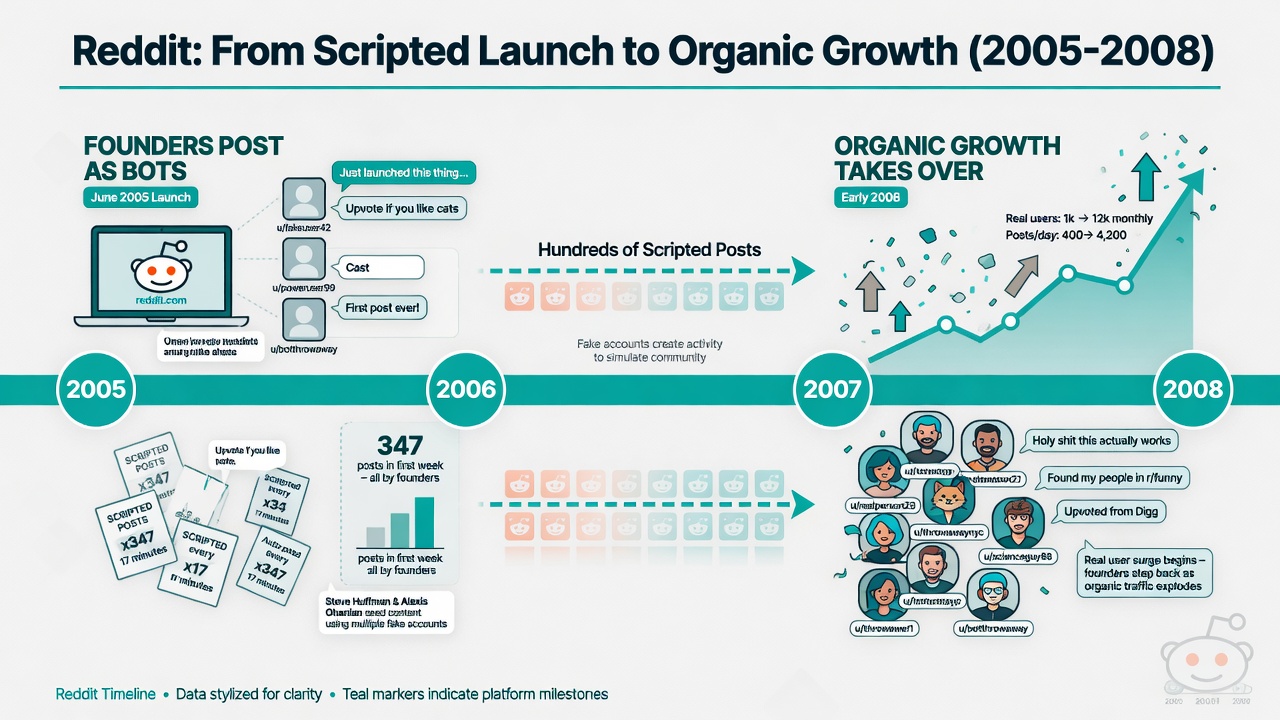
Reddit co-founders Steve Huffman and Alexis Ohanian openly admitted they faked nearly 99% of early submissions.
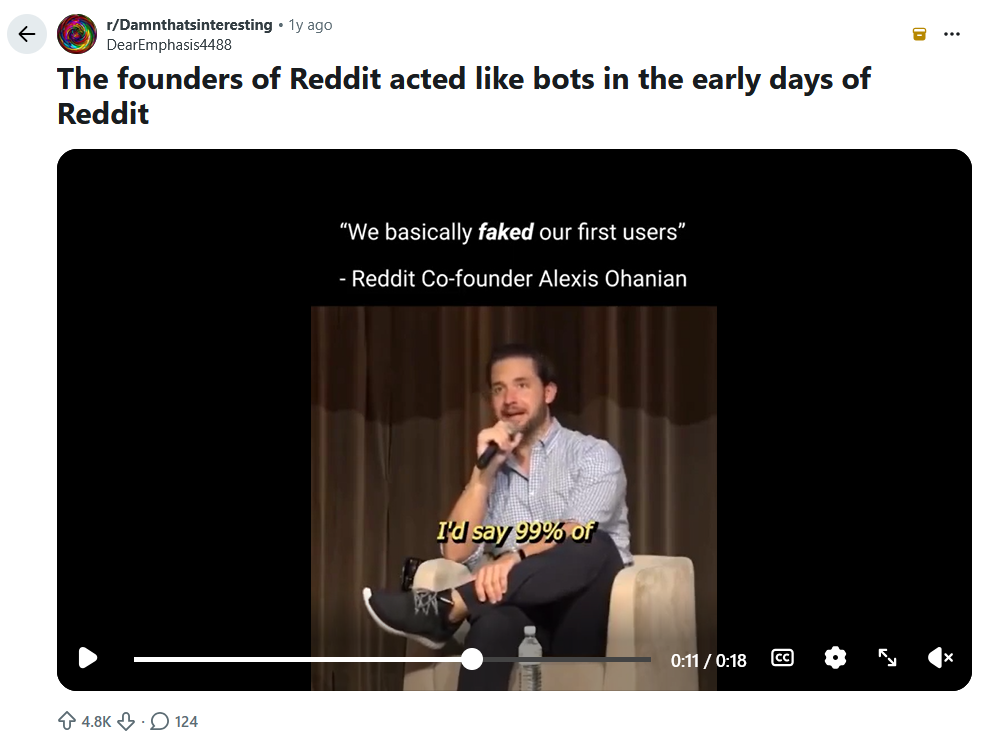
In the first few weeks, they created hundreds of fake accounts and posted links and comments under different usernames. The goal? Prevent a completely blank homepage.
Ars Technica reported in 2012 that the team submitted content non-stop to make the site look busy and diverse. They even built a hidden field to generate new fake logins on the fly.
Early Reddit felt alive because the founders manually played every role. Once real users arrived, the fake accounts quietly faded.
Ohanian later joked about it in interviews. The tactic worked. Reddit crossed the critical mass threshold and organic growth exploded.
But the confession resurfaced in 2025 videos and Reddit threads, reminding everyone that even the most successful communities started with a little smoke and mirrors.
See the full story in the Ars Technica investigation.
Tinder faced the same empty-app problem in 2012. The dating market was crowded and users needed to see matches immediately.
The documentary “Swiped: Hooking Up in the Digital Age” hints that early developers created fake profiles to ensure new users always saw activity when they opened the app.
Co-founder Whitney Wolfe (later Bumble) pushed aggressive campus marketing. They seeded college networks with real women first, then let men join to create instant matches. Classic. How do you convince men? Just tell them there's a bunch of hot girls on the app. Genius move, haha.
Bots and scripted profiles filled gaps during rapid expansion. The strategy worked. Tinder hit millions of users fast once the illusion of popularity took hold.
Real users stayed once they saw matches and conversations flowing. The platform scaled back artificial accounts and let network effects do the heavy lifting.
Facebook launched exclusively at Harvard, then spread college by college. They created instant social graphs by importing existing friend networks.
Instagram solved the problem with single-player utility. Beautiful filters made photos look amazing even if no one followed you yet. Easy sharing to Twitter and Facebook brought the first wave.
YouTube seeded with partnerships and invited creators to upload before public launch. They manually featured early videos to make the homepage feel alive.
Allegedly, none relied purely on bots, but all manufactured early momentum. Invite-only phases, exclusive access, and curated content created the perception of popularity from day one.
The pattern is clear across every major social network. Someone had to be first. Founders found creative ways to fill the void until organic users arrived.
These numbers show the scale of the challenge and the creativity required to overcome it.
Humans are wired to follow the crowd. Social proof is one of the strongest psychological triggers.
An empty feed triggers doubt. A busy feed with comments, likes, and conversations triggers curiosity and FOMO.
Bots deliver instant proof that “everyone else is here.” New users feel safe to participate.
Once real engagement hits a threshold, network effects kick in. Users invite friends. Content spreads organically.
Platforms then quietly retire the bots. The community now sustains itself.
The strategy works because perception becomes reality. But it carries serious risks in 2026.
Users have grown skeptical. One exposed fake account can destroy trust across the entire platform.
Modern AI makes bots harder to spot yet easier for regulators to criticize. Transparency matters more than ever.
Fake activity eventually gets noticed. When users discover the illusion, they leave in droves .. Or do they really?
Reddit’s early tactic drew criticism years later. Tinder bot complaints still plague app stores. Yet, they're still widely used and billion-dollar companies.
Ethical concerns grow. Deceiving users about community size erodes brand credibility.
Legal and regulatory risks rise. Data privacy laws and advertising rules scrutinize artificial engagement.
AI-generated bots make the problem worse. Platforms now fight sophisticated fake activity that mimics humans perfectly.
Retention suffers long-term when users feel manipulated. Authentic communities grow slower but last longer.
Smart founders now ask: Is there a better way than faking it until you make it?
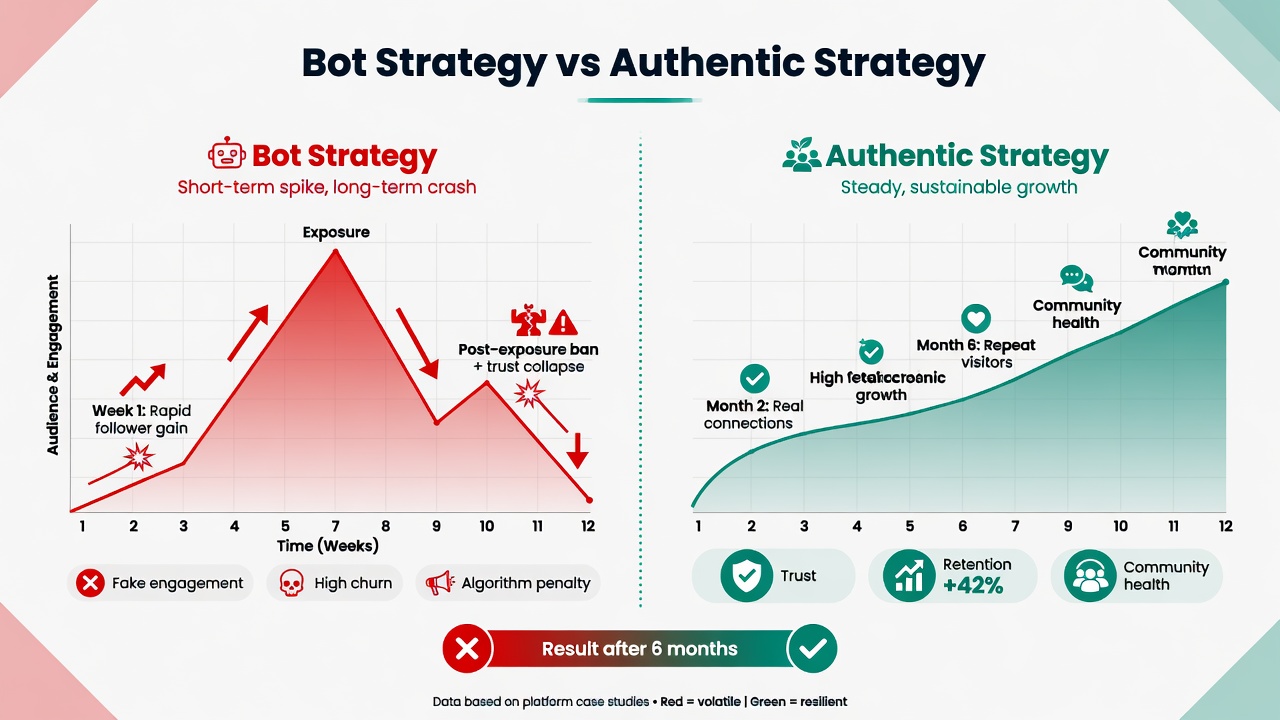
Social+ infrastructure gives you tools the early giants never had. You can seed real engagement from day one.
Start with smart onboarding that connects users to relevant groups instantly based on interests or location.
Use activity feeds and live rooms that feel alive even with small numbers. Pre-populate with high-quality starter content from verified creators.
Implement referral systems and gamification that reward genuine participation instead of fake votes.
Built-in moderation and AI matching reduce toxicity so early users feel safe and valued.
Cross-platform consistency means users see the same vibrant experience on mobile, web, and in-app.
Analytics dashboards show exactly when organic growth takes over so you scale back any temporary seeding gracefully.
These features turn the ghost town problem into a solvable engineering challenge rather than a desperate growth hack.
Learn proven patterns in the gaming industry page or Social+ Learning Hub.
Step 1: Define your core transaction layer first. Give users standalone value even before the community activates.
Step 2: Seed with real, high-quality content from hand-picked creators or your own team. Label it transparently as “official” or “curated.”
Step 3: Use interest-based matching to connect new users to small, active groups immediately upon signup.
Step 4: Add lightweight gamification—streaks, badges, and daily challenges—to encourage early participation.
Step 5: Launch with invite-only or waitlist phases to create exclusivity and FOMO without faking numbers.
Step 6: Monitor engagement metrics in real time. Celebrate milestones publicly when organic activity surpasses any seeded content.
Step 7: Transition smoothly by highlighting real user stories and success moments to reinforce authenticity.
Step 8: Keep moderation tight from day one so the community stays welcoming as it grows.
This playbook delivers faster, more sustainable growth than the old bot-heavy approach.
Users get value even with zero friends online.
AI connects people to relevant groups instantly.
Curated content labeled clearly builds trust.
Rewards real participation and early momentum.
| Modern Social+ Approach | ||
| Speed to Momentum | Fast illusion of activity | Slower but real engagement |
| Long-Term Trust | Risk of exposure and backlash | Builds lasting credibility |
| Regulatory Risk | High — fake activity scrutiny | Low — transparent growth |
| Retention After Launch | Drops when fakes are revealed | Higher with genuine connections |
The modern approach wins on trust, retention, and defensibility. Social+ infrastructure makes it possible at scale.
Strava built running communities through challenges and kudos instead of fakes. Users joined for personal tracking and stayed for peer motivation.
Discord grew gaming servers by letting creators own their spaces. Organic sharing in existing communities drove explosive growth.
Substack newsletters turned writers into community hubs with paid subscriptions and comments. No bots needed when content quality attracted readers.
These examples prove you can hit critical mass without deception when you focus on real value and smart product design.
Social+ apps in fintech, fitness, and education now replicate these patterns using ready-made infrastructure.
AI makes fake activity more convincing but also easier to detect. Platforms that rely on it risk faster backlash.
Users demand authenticity. Transparency about growth tactics becomes a competitive advantage.
Social+ infrastructure with built-in onboarding, moderation, and analytics lets you launch vibrant communities ethically and efficiently.
The next wave of successful apps will win by creating spaces that feel alive from the first user—not the first thousand fake ones.
Focus on genuine connections. The organic growth that follows will be stronger and more sustainable.
Yes. Founders created hundreds of fake accounts and posted almost all early content themselves to avoid a ghost town homepage.
Early campus seeding and hints of bot profiles created instant matches. The “Swiped” documentary explores these aggressive early tactics.
Short-term seeding carries risks. Transparent curated content and strong product utility deliver better long-term results.
Use smart onboarding, interest matching, gamification, and real-time activity feeds to create instant perceived value without fakes.
Audit your current onboarding flow for first-user experience.
Identify high-value seed content or creators you can feature transparently.
Implement interest-based matching to connect users immediately.
Test gamification features that reward real participation.
Monitor engagement metrics closely during the critical first weeks.
Build with Social+ infrastructure designed exactly for this challenge.
Authentic communities grow slower at first but become unstoppable once momentum hits. Start today.

Stop losing users and revenue to Big Tech. Own your social graph with Social+ SDK.
Guilds, leaderboards and watch parties
Portfolio sharing, group investing and live trading rooms
Study groups, peer leaderboards and live classrooms
Group trip planning and real-time shared experiences
Live shopping, group buys and influencer feeds
Challenges, kudos and community workout streaks
Fan communities, fantasy leagues and live match chats
Secure care-team chat, patient support circles and family hubs
Live voice rooms, creator AMAs and podcast communities